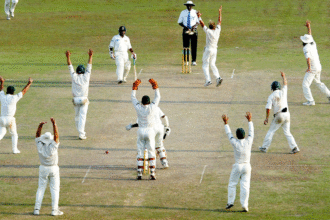
What is DRS, Cricket has evolved tremendously over the years, with technology playing a crucial role in making the game fairer and more accurate. One of the biggest innovations in modern cricket is the Decision Review System (DRS). Whether you’re watching a thrilling Test match, an ODI, or a T20 encounter, you’ve likely seen players signaling a “T” with their hands to challenge an umpire’s decision.
But what is DRS in Cricket, how does it work, and why is it so important in today’s game? The DRS in Cricket (Decision Review System) has transformed the way umpiring decisions are made by combining technology with on-field judgment. In this comprehensive guide, we’ll explain everything you need to know about DRS in Cricket, including its history, technology, rules, advantages, controversies, and frequently asked questions.
What is DRS in Cricket?
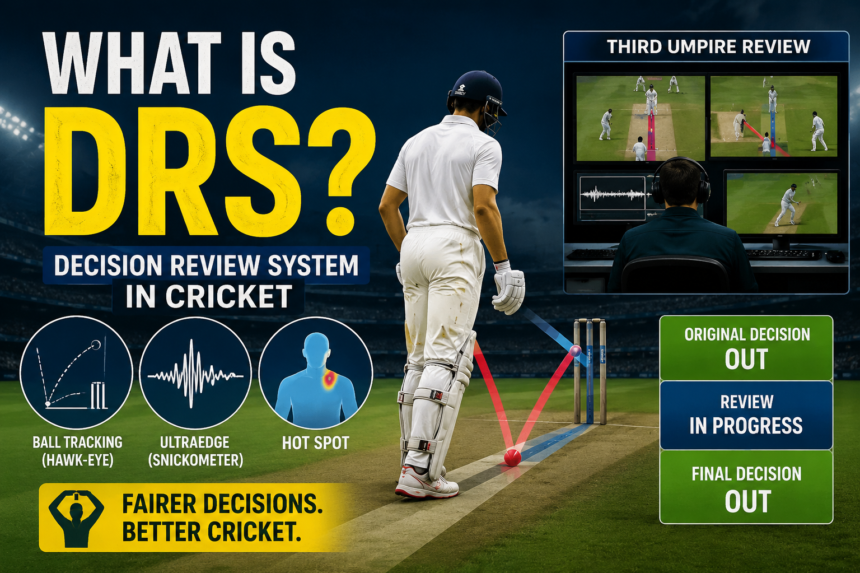
The Decision Review System (DRS) is a technology-based system used in cricket to assist on-field umpires in making accurate decisions. It allows players to challenge certain umpiring decisions, which are then reviewed by the third umpire using advanced technologies such as ball tracking, UltraEdge, and television replays.
The International Cricket Council (ICC) introduced DRS to reduce human error and improve the accuracy of crucial decisions during international matches.
Why Was DRS Introduced?
What is DRS, cricket relied entirely on the judgment of on-field umpires. While umpires are highly skilled, mistakes were inevitable due to the speed of the game.
Some common incorrect decisions included:
- Wrong LBW decisions
- Edges not detected
- Incorrect caught-behind dismissals
- Run-out confusion
- Stumping decisions
Several controversial umpiring errors in international cricket led the ICC to introduce DRS as a way to improve fairness and maintain the integrity of the sport. According to the ICC, DRS is designed to assist match officials through both umpire reviews and player reviews.
When Was DRS Introduced?
The Decision Review System was officially introduced in 2008 during a Test series between India and Sri Lanka.
Initially, many cricket boards had different opinions about its effectiveness. Over time, improvements in technology made DRS more reliable, and today it is a standard feature in most international cricket matches and major ICC tournaments.
How Does DRS Work?
The DRS process is straightforward but highly technical.
Step 1: Umpire Gives a Decision
The on-field umpire makes a decision such as:
- Out
- Not Out
Step 2: Player Requests a Review
If the batting or fielding side believes the decision is incorrect, they can request a review by making a “T” signal within the allotted review time.
Examples include:
- Batter reviewing an LBW decision
- Fielding captain reviewing a Not Out decision
Step 3: Third Umpire Reviews the Decision
The third umpire examines multiple camera angles and uses various technologies to verify the decision.
Step 4: Final Decision
If the evidence clearly shows the original decision was incorrect, the decision is overturned.
If there isn’t enough evidence to overturn it, the original umpire’s decision stands.
Technologies Used in DRS
One reason DRS is so effective is the combination of several advanced technologies.
1. Ball Tracking (Hawk-Eye)
Ball tracking predicts the path of the cricket ball after it pitches.
It helps determine:
- Impact location
- Pitching position
- Whether the ball would hit the stumps
This technology is mainly used for LBW decisions.
2. UltraEdge (Snickometer)
UltraEdge detects tiny sounds when the ball touches the bat, glove, or pad.
It combines:
- Audio sensors
- High-speed cameras
This helps determine whether there was a genuine edge before the ball reached the wicketkeeper.
3. Hot Spot
Hot Spot uses infrared cameras to detect heat generated when the ball contacts the bat or pad.
Although it has been used in some series, it is less common today because of its high operating cost.
4. Slow-Motion Replays
Multiple high-definition camera angles allow the third umpire to analyze:
- Run-outs
- Stumpings
- Boundary catches
- Grounded catches
What Decisions Can Be Reviewed?
Players cannot review every decision.
Common reviewable decisions include:
- LBW
- Caught behind
- Bat-pad catches
- Grounded catches
- Certain dismissal decisions
Run-outs and stumpings are often initiated directly by the on-field umpire through the third umpire rather than a player review.
How Many Reviews Does Each Team Get?
The number of reviews depends on the match format and current playing conditions.
Generally:
- Test Cricket: Three unsuccessful player reviews per innings.
- ODIs: Two unsuccessful player reviews per innings.
- T20 Internationals: Two unsuccessful player reviews per innings.
If a review is successful (the decision is overturned), the team retains its review.
What is Umpire’s Call?
One of the most misunderstood parts of DRS is Umpire’s Call.
This occurs when ball-tracking technology shows that the ball is only marginally hitting the stumps.
In such cases:
- The original on-field decision remains.
- If the reviewing team challenged the decision, they keep their review because the evidence was not conclusive enough to overturn the call.
Umpire’s Call recognizes the limits of predictive technology and preserves the authority of the on-field umpire in marginal cases.
Advantages of DRS
The Decision Review System has transformed cricket in many positive ways.
1. Reduces Human Error
Even elite umpires can make mistakes. DRS minimizes incorrect decisions.
2. Fair Competition
Players have an opportunity to challenge questionable decisions.
3. Greater Transparency
Fans can see the replay and understand why a decision was made.
4. Increased Confidence
Teams trust the decision-making process more because technology supports it.
5. Better Match Outcomes
Correct decisions help ensure that results are determined by players rather than umpiring mistakes.
Criticism of DRS
Despite its benefits, DRS is not without controversy.
Umpire’s Call Debate
Many fans feel Umpire’s Call creates inconsistency because identical deliveries may produce different outcomes depending on the original decision.
Technology Limitations
Ball tracking predicts the future path of the ball rather than measuring it directly after impact, which has led to occasional debate.
Cost
Advanced technologies such as Hawk-Eye and UltraEdge are expensive, making full DRS implementation difficult in some domestic competitions.
Delays
Reviews can interrupt the flow of the game, although officials continue working to make the process faster.
Famous DRS Moments
DRS has influenced several memorable matches.
Some notable examples include:
- Close LBW calls during ICC Cricket World Cups.
- Dramatic caught-behind reviews in Ashes Tests.
- Crucial overturns in IPL knockout matches.
- Match-winning decisions in World Test Championship games.
These moments have highlighted both the value and the drama of the review system.
DRS in Different Formats
Test Cricket
DRS is use extensively because Tests involve many close LBW and edge decisions over five days.
One-Day Internationals
ODIs use DRS to maintain fairness while keeping the game moving efficiently.
T20 Cricket
In the shortest format, DRS has become especially valuable because a single incorrect decision can significantly impact the result.
Tips for Teams Using DRS
Successful teams often use DRS strategically.
Experienced captains usually:
- Consult the wicketkeeper.
- Listen to close-in fielders.
- Observe the batter’s reaction.
- Avoid emotional reviews.
- Save reviews for high-impact moments.
The best teams combine instinct with communication before deciding whether to challenge an umpire’s decision.
The Future of DRS
Technology continues to evolve, and Decision Review System is expect to become even more accurate.
Possible future improvements include:
- Faster decision processing
- Improved ball-tracking algorithms
- Enhanced edge-detection systems
- AI-assisted video analysis
- Greater consistency across international and domestic competitions
As technology advances, cricket fans can expect even more reliable officiating without losing the human element that makes the game unique.
Frequently Asked Questions (FAQs)
What is DRS in cricket?
DRS stands for Decision Review System, a technology-assisted process that helps umpires make more accurate decisions during cricket matches.
Who can request a DRS review?
Only the batter involved in a dismissal or the fielding captain (or acting captain) can request a player review, depending on the type of decision.
What does the “T” signal mean?
Players make a “T” shape with their hands to indicate they want the umpire’s decision reviewed.
Does a successful review count against a team?
No. If the original decision is overturn, the team retains its review.
Is DRS use in every cricket match?
No. While DRS is standard in international cricket and major tournaments, some domestic competitions may not use the full system due to cost and technical requirements.
Conclusion
What is DRS in Cricket, The Decision Review System has become one of cricket’s most significant technological innovations. By combining advanced tools like Hawk-Eye, UltraEdge, and high-definition replays with the expertise of match officials, DRS has improved the accuracy, fairness, and credibility of umpiring decisions.
Although debates continue over topics such as Umpire’s Call and technology consistency, DRS has undeniably enhanced the modern game. Whether you’re a new cricket fan or a lifelong follower, understanding what is DRS helps you appreciate the strategy, technology, and precision involved in every review.