

📋 Table of Contents
IPL 2026 Powerplay Strategy, The IPL powerplay – the first six overs of each innings where only two fielders are permitted outside the thirty-yard fielding circle – remains the match phase that most consistently determines the competitive context for the remaining fourteen overs that follow. The run rate, wicket count, and match situation that the powerplay produces create the mathematical foundation from which the middle-overs batting platform and the death-over assault must be built. Therefore, the powerplay becomes the single most strategically consequential phase in any IPL match.
However, different IPL 2026 franchises approach the powerplay with fundamentally different philosophies. For example, some teams adopt maximum aggression, while others prioritise controlled accumulation.
Teams such as Sunrisers Hyderabad rely on an ultra-aggressive approach that has produced some of the competition’s highest powerplay scores. In contrast, franchises like Chennai Super Kings follow a calculated accumulation method that prioritises wicket preservation over boundary frequency. Consequently, understanding these different powerplay philosophies is essential for analysing IPL 2026 cricket at its most tactically sophisticated level.
Why the Powerplay Matters – The Statistical Foundation
Statistical evidence across IPL’s eighteen seasons clearly establishes the powerplay as the match phase most strongly correlated with the final batting total and, therefore, with match results. Teams that score sixty or more runs in the powerplay win a disproportionately high percentage of their IPL matches. This early run-rate foundation creates a buffer that allows aggressive batting during the middle overs and death overs from a position of strength rather than from the pressure of deficit recovery.
Similarly, wicket preservation during the powerplay plays a crucial role. Teams that lose two or more wickets in the powerplay win significantly fewer matches compared to teams that complete the first six overs with one wicket or none lost. Once early wickets fall, batting options become limited, and the pressure escalates rapidly throughout the innings.
Moreover, the optimal powerplay strategy varies depending on whether the team bats first or second.
• First innings: Teams usually target 55 to 65 runs with one wicket or fewer lost, creating a strong platform for a final total between 185 and 200 runs.
• Second innings chase: Teams adjust their powerplay aggression depending on the required run rate. If the target is manageable, batters adopt a balanced approach. However, when the required rate is high, teams must attack aggressively during the powerplay to maintain a realistic chase.
Sunrisers Hyderabad – Maximum Aggression as Philosophy
IPL 2026 Powerplay Strategy, Sunrisers Hyderabad currently employ the most aggressive powerplay philosophy. Their management has clearly instructed openers to score at strike rates above 200 during the powerplay, regardless of bowling conditions or opposition quality.
The opening partnership of Travis Head and Abhishek Sharma perfectly embodies this philosophy. Both players naturally attack from the first ball, creating a dual-threat combination that captains struggle to contain because defensive field placements for one batter often open scoring opportunities for the other.
As a result, SRH frequently produce extreme outcomes. When both openers connect well, their powerplay scores can reach 70 to 90 runs, often creating match-winning platforms that lead to totals above 200 runs. However, the same aggressive intent sometimes produces early wickets, leaving SRH at 30–40 runs with two or three wickets lost. Nevertheless, the franchise willingly accepts this volatility because the potential ceiling of their aggressive approach remains exceptionally high.
Chennai Super Kings – The Methodical Platform Builders
In contrast, Chennai Super Kings employ the tactical opposite of SRH’s strategy. Their philosophy prioritises wicket preservation and steady accumulation during the first six overs rather than constant boundary hitting.
The opening batting style of Ruturaj Gaikwad perfectly illustrates this approach. Gaikwad focuses on technical precision and placement rather than aggression. He rotates strike efficiently with singles and doubles while waiting patiently for clear boundary opportunities.
Consequently, CSK often finish their powerplay with slightly lower scores but retain more wickets. This stability allows their middle-order batters to attack later with full resources available.
Importantly, this methodical strategy proves particularly effective during high-pressure matches, such as playoff games. Opposing teams often prepare extensively for aggressive batting styles; therefore, CSK’s measured approach becomes harder to counter tactically.
Mumbai Indians – The Rohit Sharma Blueprint
IPL 2026 Powerplay Strategy, The powerplay approach used by Mumbai Indians evolved during the leadership era of Rohit Sharma and remains one of the most analytically studied strategies in IPL history.
Rohit’s technique blends calculated aggression with strong match awareness. He attacks when field placements offer boundary opportunities, particularly through his powerful off-side strokes such as the square drive and cover drive. However, he also consolidates sensibly when the bowling attack builds pressure.
Meanwhile, the presence of Suryakumar Yadav adds a completely different dimension to MI’s powerplay. His famous 360-degree batting allows him to score from deliveries that most batters treat as defensive balls. Innovative shots across mid-wicket and behind the wicket transform even well-bowled deliveries into scoring opportunities.
Royal Challengers Bengaluru – The Kohli-Salt High-Octane Opening
The opening combination for Royal Challengers Bengaluru combines two contrasting yet highly effective batting styles.
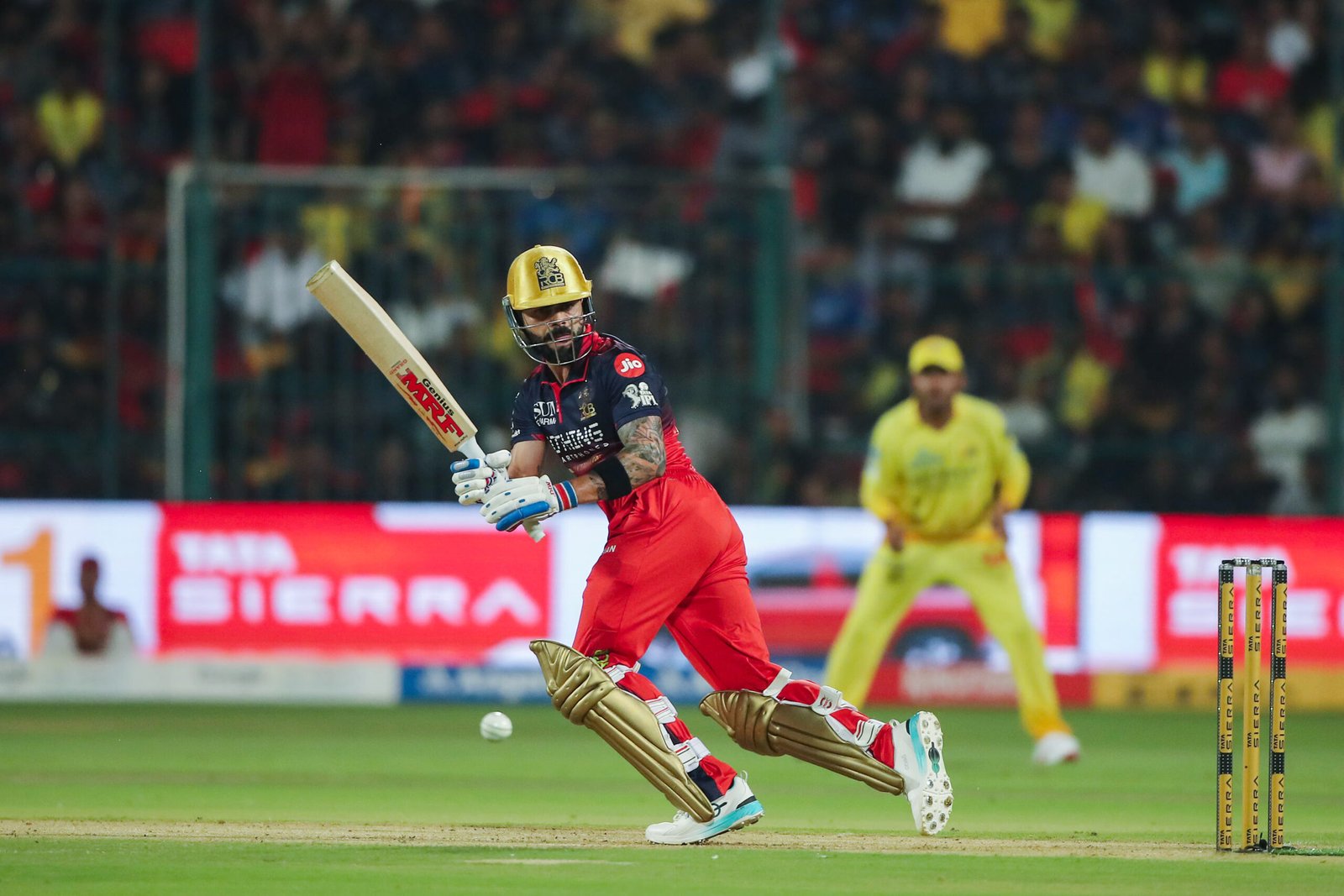
On one side, Phil Salt plays with pure aggression, attacking boundaries from the very first delivery with a strike-rate-maximising mindset. On the other side, Virat Kohli builds innings through intelligent placement, quick running between wickets, and selective boundary hitting.
Although both batters are right-handed, their contrasting scoring methods create a tactical dilemma for opposition captains. Field placements designed to restrict Salt’s boundary hitting often allow Kohli to rotate strike freely, while defensive setups against Kohli create opportunities for Salt’s explosive hitting.
Bowling Powerplay Strategy – Containing the Most Dangerous Phase
While batting teams focus on scoring quickly, captains must carefully plan their bowling strategies during the powerplay. The captain’s decisions about opening bowlers, field placements, and bowling rotations test leadership skills more intensely than almost any other phase of the match.
Many teams prefer opening with a right-arm fast bowler paired with a left-arm fast bowler. This combination creates maximum variation in angle and movement, forcing batters to constantly adjust their technique.
Additionally, successful teams often introduce pace variations during overs three and four. Bowlers switching from speeds of 140 km/h to slower deliveries around 110 km/h frequently generate false shots and wickets.
Interestingly, some teams now experiment with spin during the powerplay. Deploying an off-spinner or leg-spinner unexpectedly in overs three or four disrupts batters who expect continuous pace bowling during the opening overs.
Read More: IPL 2026 Fantasy Cricket Tips – Best Players, Winning Strategies and Team Selection Guide
Conclusion
IPL 2026 Powerplay Strategy, The IPL powerplay phase will serve as the daily tactical battlefield where the season’s competitive narrative takes shape. These first six overs determine the match context that the following fourteen overs must respond to.
Throughout the tournament, CrickViews will analyse each franchise’s powerplay strategy across the full schedule of matches. Our coverage will include tactical insights, statistical analysis, and expert commentary designed to help readers understand IPL 2026’s most strategically important phase in complete detail.