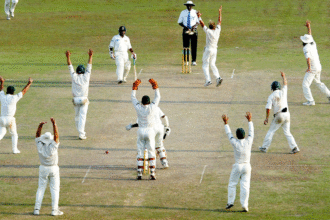
IPL 2026 Dark Horse Team – Which Franchise Could Surprise Everyone and Win the Title Against All Expectations
Every IPL season has its dark horse – the franchise that analysts underestimate before the season begins, that the public championship conversation dismisses as a genuine title contender, and that then proceeds to outperform all reasonable pre-season expectations through a combination of tactical intelligence, unexpected individual emergence, and the specific competitive momentum that early-season success generates across a group-stage campaign that transforms outsiders into genuine playoff contenders and, occasionally, into champions. The concept of the dark horse in IPL is not mere narrative convenience – it reflects the genuine competitive reality of a ten-team competition where the mathematical difference between playoff qualification and group-stage elimination is small enough that franchises rated as 10 to 15 percent championship probabilities regularly exceed those expectations through the specific competitive factors that pre-season analysis cannot fully capture. This comprehensive guide to the IPL 2026 dark horse team covers what makes a team a genuine dark horse rather than simply a weak team with surprising potential, the specific franchises whose pre-season assessment undervalues their actual championship potential, the historical precedents for dark horse IPL champions, and the specific signals to watch for in the early group-stage matches that indicate which franchise is on the dark horse trajectory toward genuine title contention.
What Makes a Genuine IPL Dark Horse – The Definition
The term “dark horse” in IPL cricket has a specific meaning that distinguishes it from the broader category of “underdog team” – a dark horse is specifically a team whose championship potential is undervalued by the pre-season prediction consensus without the undervaluation being justified by genuine squad quality limitations. An underdog team is simply weaker than the favourites and winning would be a genuine surprise; a dark horse team possesses the actual qualities required for championship contention but is rated lower than those qualities justify because pre-season analysis is missing information, misweighting specific factors, or insufficiently accounting for variables that will prove decisive once the actual competition begins.
The specific characteristics that identify genuine IPL dark horses in pre-season analysis are: squad balance that provides deeper quality across all three disciplines (batting, bowling, fielding) than the individual star-power roster suggests; a captain whose tactical intelligence and in-match decision-making quality is underrated relative to the more celebrated captains whose teams receive higher championship probabilities; an auction outcome that secured specific players at significantly below their actual performance value – the analytical bargain that translates into competitive advantage once the squad performs; and a home fixture schedule whose specific venue conditions align more favourably with the squad’s bowling attack characteristics than pre-season venue analysis has recognised.
Rajasthan Royals – The Historical Dark Horse
Rajasthan Royals’ entire IPL existence has been defined by the dark horse identity that their 2008 inaugural championship established as the franchise’s permanent sporting narrative. The Shane Warne-captained, bargain-squad team that won the very first IPL title against all pre-season expectations was the purest expression of the dark horse championship that the competition has ever produced – a franchise assembled almost entirely from uncapped or undervalued players outperforming the star-studded favourites through the specific combination of analytical squad selection, brilliant captaincy, and the collective cohesion that a team of players who know they must perform beyond individual expectations to win consistently achieves.
In IPL 2026, Rajasthan Royals present the most compelling dark horse case among the franchises rated outside the championship favourites group. Their analytical approach to squad building through the auction has historically produced the specific undervalued player discoveries whose performance exceeds pre-season expectations by the specific margin that distinguishes the dark horse from the straightforward underdog – the player who was cheap because they were unknown rather than because they were genuinely limited, whose IPL performance then reveals the quality that the pre-auction market had not yet priced. Jos Buttler’s batting anchoring the chase-oriented approach, Yuzvendra Chahal’s wrist-spin providing the bowling attack’s wicket-taking spearhead, and the specific depth additions that the IPL 2026 auction has provided give RR the competitive profile that genuinely threatens the championship favourites’ title assumptions.
Delhi Capitals – The Pant Wildcard
Delhi Capitals’ dark horse candidacy in IPL 2026 rests primarily on a single individual factor that defies statistical prediction: Rishabh Pant’s capacity for the kind of transformative captaincy-batting combination that creates team performances significantly beyond what squad analysis would predict. Pant’s specific captaincy quality – the spontaneous tactical decision-making, the tactical aggression that converts marginal situations into decisive advantages, and the personal performance inspiration that his batting provides when the team’s campaign is at its most critical juncture – is the specific X-factor that statistical prediction models consistently undervalue because its impact cannot be reliably measured through the historical data that pre-season analysis is built upon.
Delhi Capitals’ dark horse case is further supported by the specific youth and developmental trajectory of their squad – the specific dimension that means their predicted performance from pre-season analysis is based on data from stages in individual players’ development that their IPL 2026 performance will exceed. Young players who were developing in IPL 2024 and 2025 will reach the specific performance level in IPL 2026 that their developmental trajectory was pointing toward but that pre-season prediction systems, anchored to historical data, will not yet have adequately incorporated into their DC assessment. This development-driven performance improvement beyond pre-season prediction is one of the most reliable mechanisms through which dark horse franchises outperform their championship probability assessments.
Lucknow Super Giants – The Analytics-Driven Underestimated Franchise
Lucknow Super Giants’ dark horse candidacy rests on the specific systematic quality that their analytically sophisticated management approach has built across their four-year IPL existence – a squad whose data-informed assembly has progressively addressed the specific balance deficiencies that their early campaigns exposed and that, by IPL 2026, may have reached the threshold of comprehensive quality that the franchise’s management team has been deliberately building toward. KL Rahul’s captaincy intelligence, while sometimes criticised for perceived conservatism in match-day tactical decisions, provides the specific measured approach that deep tournament progression requires – the ability to win the matches that matter rather than the spectacular performances that generate excitement but not necessarily points.
The specific dark horse signal for LSG in IPL 2026 to watch for in the early group-stage matches is the bowling attack’s performance consistency relative to pre-season expectations – if the specific bowling resources that LSG’s analytics team has identified and assembled perform to the projection that their data predicted, the franchise’s overall competitive quality may significantly exceed the championship probability that their lower public profile and lack of historical championship experience has produced in the pre-season prediction consensus.
Historical Dark Horse Champions – Precedent for the Unexpected
IPL history contains multiple championship outcomes that were genuinely unexpected before the seasons that produced them – dark horse champions whose title wins reflected the specific competitive factors that pre-season analysis consistently struggles to capture. Rajasthan Royals’ 2008 inauguration title is the most famous example. Sunrisers Hyderabad’s 2016 title – won by a franchise whose bowling attack’s specific quality around David Warner’s batting was underrated before the season – represents the type of bowling-led dark horse championship that the analytical framework consistently identifies as more possible than the pre-season favourite narrative acknowledges. KKR’s own championship wins, particularly in 2012 when they transformed from perennial underperformers to champions through Gautam Gambhir’s captaincy transformation of the franchise culture, represent the captaincy-led dark horse emergence that Pant’s DC provides the 2026 equivalent potential for.
Early Season Dark Horse Signals – What to Watch For
The specific early group-stage match signals that identify which franchise is on the dark horse trajectory are worth watching in IPL 2026’s opening ten matches – the early performance indicators that validate or undermine the pre-season dark horse assessments and that provide the most reliable early evidence of which team is building the specific competitive momentum that genuine title contention requires. The specific signals to monitor are: the bowling attack’s death-over economy rate in the first five or six matches (consistently below 9 runs per over suggests a bowling unit performing above pre-season expectation); the batting lineup’s partnership-building frequency (the number of fifty-plus partnerships per match being above the pre-season expectation level suggests batting depth better than predicted); and the fielding intensity in run-out attempts and boundary saves (consistently excellent fielding suggests team culture and athletic preparation beyond what squad analysis predicted).
Conclusion
The IPL 2026 dark horse team is waiting to be identified – somewhere among the franchises rated as 10 to 15 percent championship probabilities before the season begins is the team whose specific combination of underrated qualities, developmental improvements, and tactical advantages will carry them to a championship that the pre-season prediction consensus did not adequately anticipate. CrickViews will track the dark horse trajectories throughout IPL 2026 – identifying the early signals, updating the dark horse assessment as competitive evidence accumulates, and celebrating the specific underdog excellence that makes the IPL’s championship story so much richer and more dramatic than the pre-season favourite narrative alone could sustain. The dark horse of IPL 2026 is out there. CrickViews will find them.